Direct line: 318-708-9279
Open 24/7 — No fee unless we win
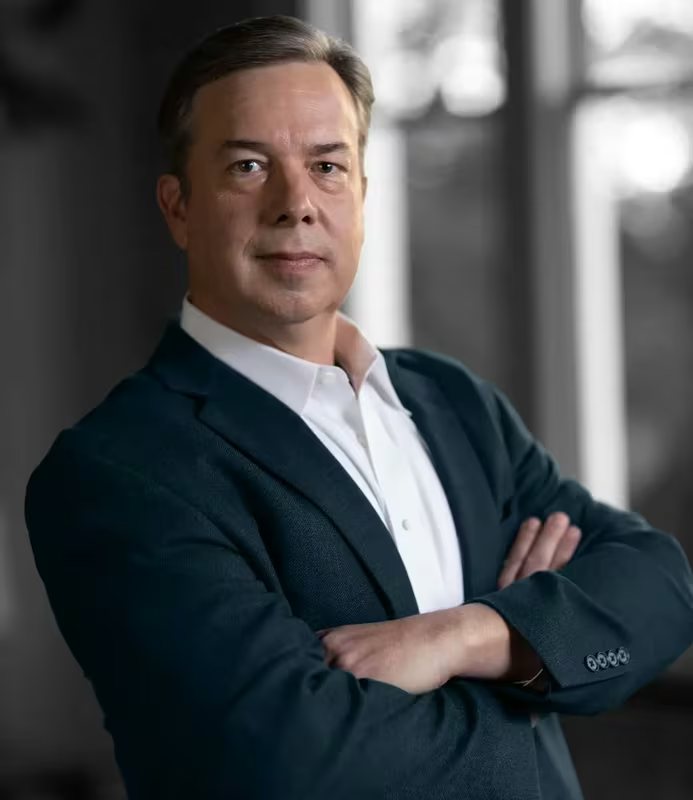
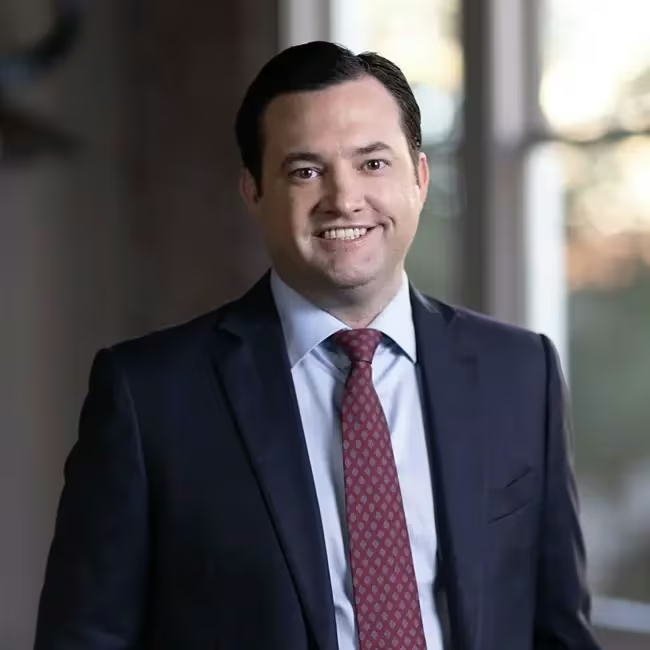
Get Directions →Founding partners Trey Morris and Justin Dewett lead every Shreveport injury case Morris & Dewett takes.
What We Handle
 Car Accidents Rear-end, intersection, and highway collisions across Louisiana.
  Truck Accidents 18-wheeler and commercial-vehicle wrecks governed by federal trucking rules.
  Motorcycle Accidents Serious-injury motorcycle crashes where bias against riders is common.
  Pedestrian Accidents Crosswalk and roadway pedestrian injuries with high-stakes liability.
  Bicycle Accidents Cyclists struck by drivers who failed to share the road.
  Bus Accidents Transit, school, and charter-bus crashes involving public and private carriers.
  Slip & Fall Falls caused by wet floors, poor maintenance, and hidden hazards.
  Catastrophic Injury Brain, spinal-cord, amputation, and severe-burn injuries that change a life.
  Brain Injury Traumatic brain injuries with long-term cognitive and physical effects.
  Burn Injury Severe burns from fires, explosions, chemicals, and electrical contact.
  Wrongful Death Claims brought by families after a fatal accident or act of negligence.
  Construction Accidents Falls, struck-by, and equipment injuries on the job site.
  Industrial Accidents Plant, warehouse, and heavy-equipment injuries in industrial settings.
  Oilfield Accidents Drilling, pipeline, and refinery injuries across the energy sector.
  Maritime & Jones Act Jones Act and general-maritime claims for seamen and vessel crews.
  Workers' Compensation On-the-job injuries and the benefits owed to injured workers.
  Nursing Home Abuse Neglect and abuse of residents in long-term-care facilities.
 Morris & Dewett's Shreveport office at 509 Milam St represents people who have been seriously injured across Shreveport and Caddo Parish. Someone is available to take your call 24 hours a day, every day of the year, and the first conversation about your case is always free.
The Shreveport team handles the full range of serious-injury and wrongful-death claims — car, truck, and 18-wheeler collisions, motorcycle and pedestrian crashes, oilfield and industrial accidents, premises liability, and more. Founding partners Trey Morris and Justin Dewett lead the firm's cases, and every claim gets the combined attention of the firm's attorneys, case managers, and medical and life-care specialists.
There is no fee unless we win. If you or a family member was hurt in Shreveport or anywhere in Caddo Parish, call the Shreveport office or request a free consultation — we review your case at no cost and explain your options.
I hired Morris and Dewett back in November of 2025.
They helped me get through my hard times of being off work, stress, and worry. Anytime I had a question I could call and they always had an answer. Very nice and professtional people. Thank you Morris and Dewett for making this an easy process for me and my family.
Wonderful experience with Morris and DeWitt, everyone was articulate and punctual, and open to all my questions about the process.
My case couldn't have been handled by a better team! Caity Nerren, Jessica Christian, and Meghan Nolen were all fantastic and helped every step of the way. Thanks again for all of your hard work.
Caity, Coleman, and Brooke worked hard to get our case settled in a timely manner!
I highly recommend Morris & Dewett for any personal injury claims!
I am very appreciative for the services they have provided me with, very nice and welcoming staff and they take care of you every possible way.
They are the way to go !
This firm is amazing.
They were very strategic and handles things in a great manor. They are very knowledgeable and the resources are there to match. I highly recommend this firm.
Handling my case with care and made a stressful situation much easier.
Communication was always clear and timely, and I felt like they genuinely had my best interest in mind. I would recommend them to anyone needing legal help.
Reviews reflect individual client experiences. Past results do not guarantee future outcomes.
Free case review. No fee unless we win. Available 24/7.